Millions of children attend school every day. But everyone learns differently, and schools vary across times and places. So, are schools really the best places to learn? Let's explore further…
Who said it? Match these quotations about school to their famous speakers...
“I hope you’re pleased with yourselves. We could all have been killed -- or worse, expelled.”
The source of this quotation is J.K. Rowling's Hermione Granger, who tells off her housemates Harry and Ron for their misbehaviour in Harry Potter and the Philosopher's Stone.
“Education is the most powerful weapon you can use to change the world.”
South African politician Nelson Mandela made this statement, which has now been adopted by the Nelson Mandela Foundation as they work to take his legacy forward by supporting education and freedom of information in South Africa.
“If I were a headmaster I would get rid of the history teacher and get a chocolate teacher instead.”
This surprising suggestion was made by Roald Dahl, who argued that teaching children about chocolate would mean that they'd at least learn something they were interested in! This comment might have been inspired by an episode from Dahl's teenage years, which he writes about in his autobiography Boy: at school, he and his friends were lucky enough to be invited to be taste-testers for the Cadbury's Chocolate Factory! This experience also became the inspiration for Dahl's book Charlie and the Chocolate Factory.
“The best thing for being sad… is to learn something. That is the only thing which the mind can never exhaust, never alienate, never be tortured by, never fear or distrust, and never dream of regretting.”
In the years leading up to World War II, author T.H. White began work on The Sword in the Stone. This novel was his own version of the King Arthur story; one which argued that being powerful does not give people the right to bully others and that "might does not always make right". One of his main characters is the wizard Merlyn, who gives this advice to the boy who will one day become King Arthur. You can read more about The Sword in the Stone and its background in this blog post from the University of Glasgow.
“The illiterate of the 21st century will not be the [person] who cannot read and write, but [the person] who has not learned how to learn.”
In 1970, futurologist Alvin Toffler published a book called Future Shock, which made many interesting predictions about the future of business and work. The book predicted that 'future shock' would be a problem for some people, who could become overwhelmed by too much social, economic or political change in too short a period of time. The book is still in print, and you can even read an extract from it on the publisher's website.
“Education is a lifelong journey. We never know everything, but we constantly evolve as we learn more about our communities, this ever-changing world, and ourselves.”
Singer Rihanna made this comment in an opinion piece for The Guardian newspaper in which she discussed her work with the Clara Lionel Foundation supporting girls' rights to education.
Why do we have to go to school, anyway?
Ever felt like not going to school, and wondered why you have to? Well, strictly speaking, in the UK, you don’t. You can be home-schooled, for example. But you do have to get an education - and generally, it’s been accepted that going to school is the ‘best’ way to do that. Oxford's Professor Iram Siraj (Department of Education) explores the purpose of what's taught in UK schools...
The word ‘school’ comes from the Greek 'skhole', meaning leisure or free time -- a break from working to engage in debate. And 'pedagogue' (another word for a teacher) means a child-guide. In Ancient Greece, this was typically a family’s slave whose job it was to escort boys to school and supervise them.
Throughout the ages, in the UK and Europe, the teacher has shifted from being a local religious figure to a trained professional. In the past, religious institutions tended to be the only places offering an ‘education’ and so lessons often focused on morality and studying religious scriptures. The space of the classroom has also changed over time, from children of all ages running around in the same room with no specific instruction to parallel teaching (where two teachers support a class), to the model we know today which is still essentially teacher-fronted and in rows. That said, some schools are moving towards more student-centred ways of teaching and group/project-based learning.
So who picks what you learn in school?
Nowadays, these kinds of decisions tend to be made partly by your school and your teachers (who determine some of the specifics such as the books you study) and partly by the government, which decides overall on the subjects you need to know about. The general idea is that everybody needs to know about particular things to get a good job and this can depend on what skills are in demand by society at a given time. This explains why there’s been a heavy emphasis on science in recent years. On the other hand, that also means there’s often less chance for young people to study the arts, including music and drawing.
So the list of school subjects that young people have to study has changed. But that’s happened quite frequently across the years. In the Victorian era (1837-1901) -- when mass schooling as we know it today is thought to have begun -- there were very different ideas about how children should be taught and what they should learn.
“There were very young people out on the streets, and the Victorians were becoming increasingly concerned about the lack of basic knowledge for the population,” says Prof. Iram Siraj (pictured above right). “We were an information-poor society. We had very high rates of illiteracy, [and] there was no systematic way of teaching skills to people... reading and writing and so on.”
“[And so the focus of school became] about basic skills, social cohesion [i.e. learning how to behave properly and get along with each other], and creating a society where people could contribute more advanced things than they had in the past.”
Skills for life
Prof. Siraj says that it can be beneficial to give children activities to work on in teams, encouraging them to solve genuine problems and ensuring that they feel like they are really contributing to an issue, rather than simply learning things to be tested on.
There is more to school than simply learning facts, and a teacher's role is important in all of this.
Teachers do more than just tell pupils what to do, they encourage students and help them learn how to learn. For example, they can help pupils develop the skills needed to be able to weigh up how useful or accurate a piece of information is.
Plus, Prof. Siraj explains that children do better in secondary school if they’ve been shown useful social skills in primary school. One of the most vital of these is self-regulation. This is because if you can self-regulate (i.e. keep trying when something’s difficult, concentrate on what you have to do, and not lose your temper or get upset), then you’re set up to do well when it comes to school and beyond.
Into the future
Prof. Siraj explains that the ability to self-regulate is something that is increasingly helpful to today’s young people when they enter the workplace as it’s likely that they will be doing lots of different jobs during their lifetime.
“We have too much information,” says Prof. Siraj. “We have knowledge on the internet doubling every couple of years. The nature of schooling has become very different. It can’t just be about subjects anymore. It needs also to be about how we learn to learn, and how we can continue to learn and adapt according to what’s out there. In previous generations, people had a job and they tended to have it for life. That’s not the case anymore. You’re going to need more flexibility and multiple skills.”
Prof. Siraj thinks that many young people today are able to adapt to different situations and different tasks but she isn’t sure that schools necessarily always help them do that.
“We’re going to need a whole different level of skills -- and the world is developing rapidly,” she says. “We have children with many of these thinking skills -- but are we appreciating them in schools? I don’t know.”
So do schools need to change? Do they need to use more modern technology to help young people learn? And is learning alongside your friends distracting or brilliant and inspiring? What do you think?
How does the design of a school affect our experience of learning?
This was the question that Oxford University researchers Professor Harry Daniels and Hau Ming Tse set out to answer when they looked at the experiences of five different secondary schools which had recently created new buildings.
Their study “Design Matters? The effects of new schools on pupils’, teachers’ and parents’ actions and perceptions” looked at a number of factors, including:
- How were school buildings designed in the first place? Who had a say in things like how big the classrooms would be, or whether there would be lots of open spaces? In some schools, these decisions might be mostly up to the head teacher, but in other schools teachers, parents and even pupils might have been able to contribute too.
- What were pupils’ expectations before beginning at a new school? Did they prefer schools that were similar to the environment they’d experienced at primary school, or did they respond better to a different type of building when they were older?
- How and why were the different spaces and buildings in the school used ‘in real life’ after they had been designed and built? Did these match the expectations of the people who had planned them, or did teachers and pupils use the spaces in unexpected ways?
The researchers then put all of these findings together to try to figure out what the ‘built environment’ (the way in which the school was designed and built) said about the priorities of the school as an organisation.
To do this, they drew on the work of the Russian philosopher Lev Vygotsky, who argued that cultural artefacts (like buildings) have an effect on people’s experiences of cultural and social institutions.
What does that mean?
Let’s imagine that a shopping centre is built in a way that means you have to make a purchase at a café or restaurant to be allowed to sit down. For a person who doesn’t have much money, the shopping centre could represent a very unwelcoming place. This is because they might have to stay standing up and moving around for a long time, or choose to spend more than they can afford just to be able to sit down and rest. By contrast, a shopping centre where the architects have chosen to include free public seating as part of the design will be more welcoming, and could lead to an overall more positive experience, especially for those who might have a special need to sit down more like elderly or disabled people. That’s a very simple example, but it does show the ways in which the choices made by architects can affect people’s ability to take part in public life.
Best and worst fictional teachers
Miss Trunchbull is the awful head teacher of Crunchem Hall, who meets her match in Roald Dahl’s small but powerful Matilda (1988). It’s not clear why Miss Trunchbull became a teacher, but it certainly wasn’t because she wanted to make school a great place to learn. In classic Roald Dahl fashion, Miss Trunchbull is larger than life. She somehow gets away with throwing children out of windows, swinging them around by their hair and locking them in a cupboard called the Chokey!
''Small people should never be seen by anybody. They should be kept out of sight in boxes like hairpins and buttons. I cannot for the life of me see why children have to take so long to grow up. I think they do it on purpose.''
Severus Snape is the slimy Potions master in J K Rowling’s Harry Potter series (1997-2007). Though there’s certainly more to Snape than meets the eye, there is no doubt he is a truly terrible teacher. He shows outrageous favouritism to students in his own school house and bullies those who struggle with his lessons. Rowling may have set her novels in a magic school, but her presentation of how school isn’t always fair is definitely relevant to our Muggle world.
"I can teach you how to bottle fame, brew glory, even stopper death -- if you aren't as big a bunch of dunderheads as I usually have to teach.”
- Harry Potter and the Philosopher's Stone (1997)
We first met the X-Men in the original comic book series (1963-1968), but many know and love them from the films (2000-present). The leader of the X-Men, Professor X, may be a superhuman mutant, but he’s also a teacher. His “School for Gifted Youngsters” is not your standard school - Professor X uses it to develop his students’ superpowers as well as teaching ‘normal’ lessons. His most important quality, however, is one which the best of ordinary teachers can have - the belief in equality and peace between those who are different from one another.
“Just because someone stumbles and loses their path, doesn't mean they're lost forever.”
Chiron is not your average teacher—he’s an immortal centaur whose previous job was teaching Greek heroes like Achilles and Hercules! He’s now the activities director of Camp Half-Blood, the summer camp for demi-gods created by Rick Riordan in his Percy Jackson series (2005-2009). He trains Percy, Annabeth and others for the quests that, if you’re the child of a god, are sure to come. Chiron also shows much wisdom and kindness, acting as a father as well as a teacher for many of the characters.
“You'll do well, Percy. Just remember your strengths and beware your weaknesses.”
What could school look like in the future?
The technology of learning has changed a lot over the years. But the internet and other now-familiar technologies were not the first new inventions to cause a stir in the classroom. When typewriters were first introduced in the 1930s, researchers studied the impact of this “new technology” on students. They were concerned about how children might react and how it could affect their writing ability.
Technology now is changing even faster than in the 1930s and as schools use these new inventions more and more we ask: What could school look like in the future? The main technologies that many experts believe will impact education are Virtual Reality (VR) and Artificial Intelligence.
Learning through Virtual Reality
VR is a simulated experience that can reflect the real world around you or be completely different. Think of it as being able to take a walk around your favourite video game.
Often confused with VR, Augmented Reality (AR) is a similar style of technology, adding a layer of virtual components such as digital images or sensations to interactions with the real world. For example, Snapchat and Instagram filters are both types of Augmented Reality. Click here to find out more about the differences between VR and AR.
VR techniques are already being implemented in some classrooms in the UK. Learning technologists from the University of Oxford used ClassVR headsets to help students from a school in Oxfordshire learn about the First and Second World Wars. Specifically, VR was used to help students understand the experiences of soldiers living in the trenches and show the reality of historical events. Click here to read more about this case study. Could VR field trips be something we see more of in the future? Do you think you would enjoy one?
Experts have found that VR headsets can improve learning ability and how students feel in the classroom. Research led by the University of Warwick has compared textbook-based, video, and VR learning in a biology classroom (Allcoat and von Mühlenen, 2018). The research found that it’s not the visuals and graphics of VR that helps learning, but the ability to interact with the environment. In addition, the students felt more positively about their learning experience compared with traditional textbook or video learning. With these sorts of results, we might see more VR in our classrooms in the future.
Beyond the traditional classroom setting, VR is already being used for a variety of other educational purposes. The Life-Saving Instruction for Emergencies (LIFE) is a healthcare-focused programme that uses VR to educate healthcare workers in developing countries on resuscitation techniques for babies and children.
https://www.youtube.com/watch?v=xsCnJUA0LRY
VR technology has applications in lifelong learning too -- particularly with the development of vocational skills, such as technical training for work in the trades. These programs generally focus on providing students with hands-on instruction. For example, the car manufacturer Volkswagen have been using VR to train their mechanics on how to service and repair their products.
However, according to recent research, technology is not the effortless solution to education-based problems it's sometimes portrayed to be. Focusing on providing schools with hardware such as laptops or VR headsets is not always the best approach to improving education and making schools more effective. For example, not all schools can afford this technology and if they spend their budget on such tools, then it's likely that only a few students can use them at one time. Plus, if several schools can't afford them, especially in poorer areas, then the regional learning gap may increase. Studies have shown that for an educational technology to be effective in schools, the strategy for introducing it has to take into account the uniqueness of any given setting. In other words, it needs to appeal to the different needs and wants of the users (i.e. students, teachers etc.).
Artificial Intelligence in Education
There are many different definitions of Artificial Intelligence (AI), but broadly it describes a computer system designed to “think” intelligently like humans. AI already has many uses, from searching online with websites such as Google, to adverts on Social Media, to predicting and treating diseases. Similar to how many people felt about the Internet and online-learning coming to classrooms in the mid-2000s, the idea of using AI in classrooms concerns many researchers and parents alike.
How your AI teacher learns
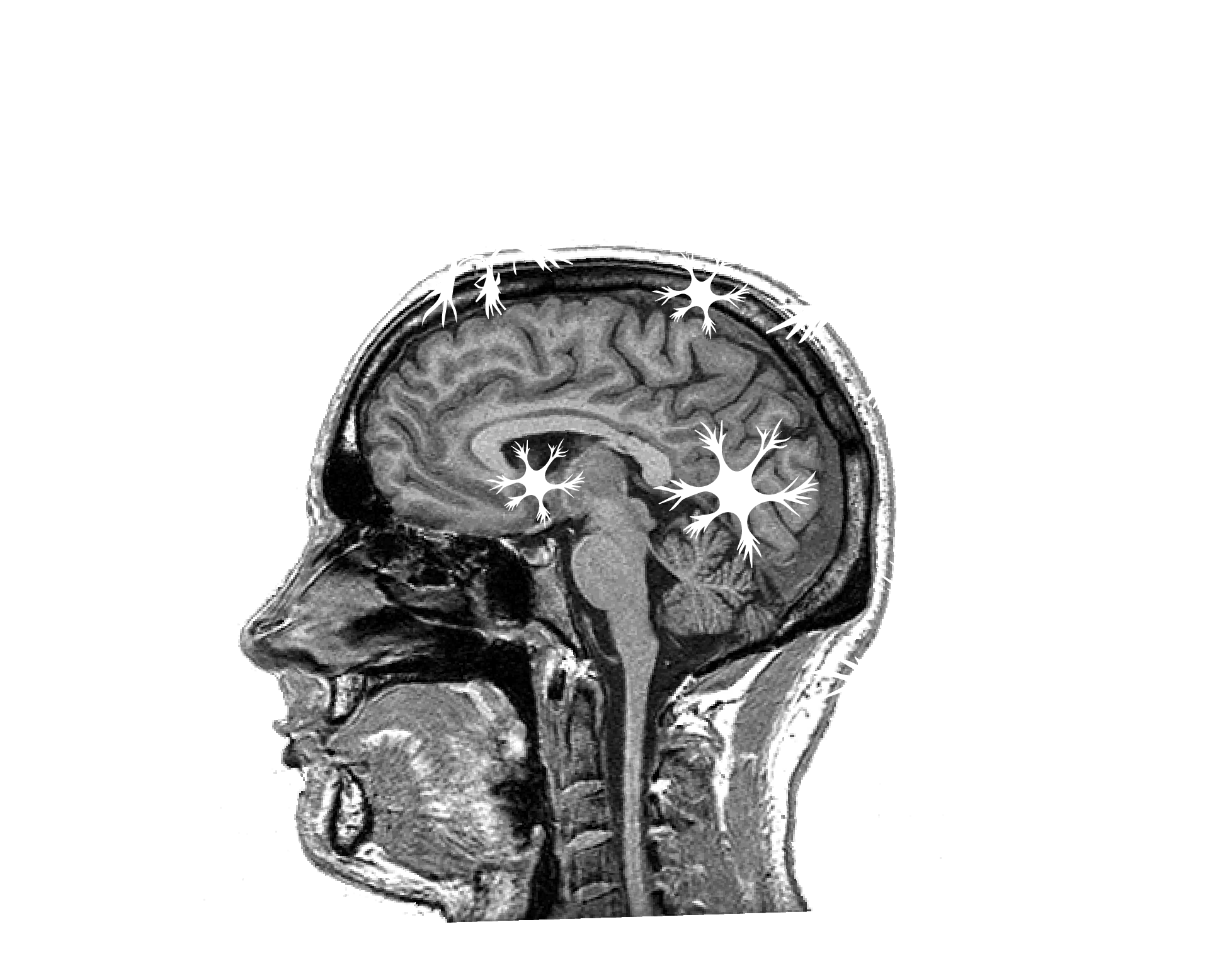
How artificial intelligence works is pretty simple. AI systems are first shown patterns and information from data provided by human programmers. Following this, they then learn through their own experiences without being told what to do. The more layers of learning and programming that are involved, the ‘deeper’ the learning. Much like people, AI learns to make good guesses from being told what a good answer looks like and what a bad answer looks like. In fact, some AI deep learning techniques, called ‘neural networks’, are even built to work like the human brain!
You might not be able to believe it now but virtual assistants like Amazon’s Alexa or Apple’s Siri could soon be helping us learn in our classrooms. This is because AI works by comparing information it is given by the student with a huge volume of preloaded datasets. And so it could, in theory, be used to mark students’ work. Some companies are even looking to use AI to teach and tutor students when they're struggling at home with homework and preparation for tests (content that their parents may not be able to help with). But many researchers believe that AI will not replace teachers as their roles of care-taking and looking after students are so important in schools.
The problem of AI
Across applications of AI, there is much discussion on how it can be used well and in a way where it benefits everyone. In talking about AI, many use the term “algorithmic accountability”. Whilst this sounds complex, what it means is: Who is held responsible for the results of a computer programme? Since AI is made by humans, it can have biases and mistakes programmed into it that can have big consequences. For example, imagine if a self-driving car has to swerve to avoid running over Animal A in the road. Would it still make the decision to swerve if there is another animal, Animal B, on the pavement that might be injured? What decision should the computer programme in the car make? Researchers at Oxford are leading a project on understanding how AI works and making sure it works for everyone (source).
Because AI learns, it changes how it understands what is the right or correct action to take in a given situation. If we decide to bring AI into the classroom, researchers and politicians need to think about what effects it might have. The FutureMakers podcast features academic debating on the problems of Article Intelligence in different areas of society.